
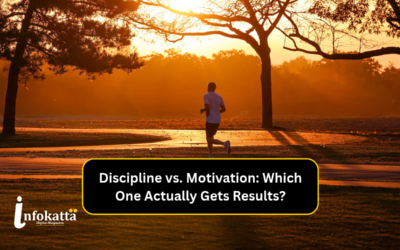

You know the task matters. You know putting it off will only make it worse. And yet, somehow, you find yourself reorganizing your desk, checking your phone, or suddenly deciding now is the perfect time to clean the kitchen. If that sounds familiar, you are not lazy, and you are not broken. You are procrastinating, and there is real psychology behind why it happens, and real ways to stop.
What Procrastination Actually Is
Procrastination is the act of delaying or avoiding a task despite knowing the delay will likely make things worse. It is not the same as resting or prioritizing. Resting is a choice you make peacefully. Procrastination usually comes with a quiet, nagging discomfort, because part of you knows the task is still waiting.
Researchers who study procrastination, including psychologist Dr. Tim Pychyl, describe it less as a time management problem and more as an emotion management problem. You are not avoiding the task itself. You are avoiding the uncomfortable feeling the task creates, whether that is boredom, anxiety, self-doubt, or simple overwhelm.
Why We Procrastinate: The Real Reasons
1. The task feels emotionally unpleasant. Boring, confusing, or anxiety-inducing tasks trigger avoidance. Your brain seeks short-term relief, and scrolling your phone provides it instantly.
2. Fear of failure (or fear of success). If a task is tied to your self-worth, delaying it protects you from finding out you might fail. As long as you have not really tried, you have not really failed.
3. Perfectionism. Believing the work must be flawless makes starting feel impossible, so you wait for a “better” moment that never quite comes.
4. The task is too big or unclear. A vague, large goal like “write the report” has no obvious starting point, so your brain avoids it in favor of something with a clear, easy action.
5. Present bias. Humans are wired to value immediate comfort over future benefit. Your brain would rather feel good now than feel good later, even when you know later matters more.
6. Low energy or burnout. Sometimes procrastination is not avoidance at all. It is your body telling you that you are running on empty.
The Procrastination Cycle
Procrastination usually follows a pattern: you feel discomfort about a task, you avoid it, you feel short-term relief, then guilt sets in as the deadline gets closer, and stress rises. Often, that stress finally pushes you to do the task at the last minute, which reinforces the belief that “I work best under pressure.” In reality, you just found a way to make the discomfort urgent enough to finally act. This cycle repeats because the relief you feel each time you avoid the task teaches your brain that avoidance works, at least in the short term.
How to Stop Procrastinating: Practical Steps
1. Make the First Step Tiny
Instead of “write the report,” commit to “open the document and write one sentence.” Tasks that feel small enough to start remove the mental barrier that keeps you stuck. Once you start, momentum often carries you further than you expected.
2. Use the Two-Minute Rule
If a task takes less than two minutes, do it immediately instead of adding it to a list. This clears small, nagging tasks that otherwise pile up and add to the sense of overwhelm.
3. Try Time Blocking
Assign a task to a specific block of time on your calendar, rather than leaving it as an open-ended item on a to-do list. A vague task with no deadline is far easier to avoid.
4. Remove Friction, Add Friction
Make the task you want to do easier to start, such as opening the document the night before. Make the distraction you want to avoid harder to reach, such as logging out of social media apps or putting your phone in another room.
5. Use the 5-Second Rule
Popularized by author Mel Robbins, this technique involves counting backward from five and physically moving the moment you hit one, before your brain has time to talk you out of it. It interrupts the hesitation that often leads to avoidance.
6. Forgive Yourself for Past Procrastination
Research on self-compassion shows that people who forgive themselves for procrastinating in the past are less likely to procrastinate again. Guilt does not build discipline. It usually builds more avoidance.
7. Address the Emotion, Not Just the Task
If a task feels overwhelming, ask what specifically feels hard about it. Naming the real fear, whether it is fear of doing it badly or simply not knowing where to start, often reduces its power.
8. Build the Identity, Not Just the Habit
Instead of only tracking whether you finished a task, remind yourself that you are becoming someone who follows through. Small, repeated actions build both a habit and a self-image that makes future action easier.
When Procrastination Might Be Something More
Occasional procrastination is normal. But if it is constant, affects your work or relationships, or comes with heavy anxiety, it may be connected to deeper patterns such as chronic stress, ADHD, or anxiety. If that sounds like you, it is worth talking to a professional rather than only trying productivity tricks.
Final Thoughts
Procrastination is not a character flaw. It is your brain’s attempt to avoid discomfort in the short term, even when it costs you more in the long term. You do not need more willpower. You need smaller first steps, less friction, and a little more patience with yourself. Start small today, and the cycle starts to loosen its grip.
FAQ
Is procrastination a sign of laziness?
No. Procrastination is usually about avoiding an uncomfortable emotion connected to a task, not a lack of effort or care.
Why do I work better under a deadline?
The pressure of a deadline creates urgency strong enough to override the discomfort that was causing avoidance. It feels effective, but it usually adds unnecessary stress.
What is the fastest way to stop procrastinating on a task right now?
Shrink the task to the smallest possible first step, something that takes under two minutes, and start there.
Can procrastination be linked to anxiety or ADHD?
Yes, for some people. If procrastination is constant and disruptive, it is worth discussing with a professional.